Mission Critical Polymers for Performance Rocketry

Every part of a rocket’s design is critical. If one piece fails or the performance of that piece doesn’t match the demands of the environment, then the whole rocket fails. Organizations like NASA, Boeing, Blue Origin and SpaceX approach rocket part design and selection with careful consideration.

Polymers have a unique position in the Aerospace and Defense market as they present features and capabilities that can stand the test of harsh environments and continuous use. High heat, dielectric strength, moisture resistance, insulative properties and impact strength all come into play in building the parts that make a performance rocket launch skyward.

In this insightful blog, we discuss four key aerospace polymers enabling success in the rocket industry.
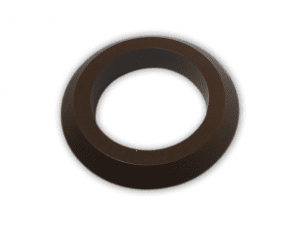
 

VESPEL® by DuPont

Polyimide (PI) is an extreme-performance thermoplastic branded by DuPont Co. as VESPEL®. The material’s prime characteristics include outstanding creep resistance, high impact strength, and low wear at high PV. VESPEL® components allow for continuous operation temperatures of 500°F (260°C) with short-term excursion capabilities of 900°F (482°C). It is a well-known performance thermoplastic for aircraft parts, such as thrust washers, valve seats, seals and wear components.

VESPEL® is available in many grades to meet specific design requirements. The current available grades include SP-1 (Unfilled), SP-21 (15% Graphite), SP-22 (40% Graphite), SP-211 (15% Graphite and 10% PTFE) and SP-3 (15% Molybdenum Disulfide).
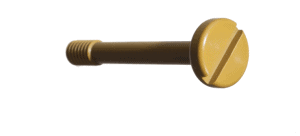
 

TORLON®

When it comes to high heat and stress, TORLON® can take it. Polyamide Imide (PAI) is an amorphous thermoplastic with the highest performing, melt-processability. It maintains strength and stiffness up to 500°F (260°C), has excellent wear resistance, and endures harsh thermal, chemical and stress conditions. With its continuous use under high heat and stress, this material is often used in the following aerospace applications:  bearing cages, high temperature electrical connectors, structural parts, valve seats, seals and wear components.

There are several TORLON® grades available for PAI, including TORLON® 4203 (electrical and high strength), TORLON® 4301 (general purpose wear), TORLON® 4XG (glass-reinforced) and TORLON® 4XCF (carbon-reinforced).


KEL-FKEL-F®

KEL-F, or PCTFE (polychlorotrifluoroethylene), is a type of fluoropolymer that has a wide range of applications in the aerospace industry. It is prized for its high strength and durability, as well as its resistance to chemicals, heat, and wear. What makes KEL-F® stand out is its temperature range from -400°F to +400°F. KEL-F® In aerospace applications, KEL-F® is often used in fuel lines, hydraulic systems, and gaskets. Thanks to its unique properties, KEL-F® is an essential material for many aerospace applications.

At AIP, we machine various grades and brand name PCTFE. Branded names include the following: KEL-F® and NEOFLON®.
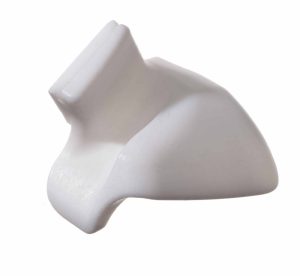


PTFE

PTFE, or Polytetrafluoroethylene, is a synthetic fluoropolymer of tetrafluoroethylene that has numerous applications in aerospace due to its low coefficient of friction, high temperatures and chemical resistance, and non-stick properties. PTFE was first used in the aerospace industry in the 1940s and has since been used in a variety of aerospace applications such as fuel lines, hydraulic systems, and gaskets.

At AIP, we machine various grades and brand name PTFE. Branded names include the following:  FLUOROSINT® 207, FLUOROSINT® 500, DYNEON®, SEMITRON® ESD 500HR, SEMITRON® PTFE, TEFLON®.


Polymers take flight as a new standard of aircraft excellence

As aerospace rocketry and aircraft continue to evolve with advanced technologies and sophisticated capabilities, material selection is crucial. Every piece that goes into a rocket is carefully thought and crafted for the highest level of performance. Torlon®, Vespel®, KEL-F® and PTFE are all thermoplastics enabling success in mission critical Aerospace and Defense rocketry.



Supporting Materials

Aerospace Market Materials

Aerospace & Defense Machining

Follow AIP Precision Machining on Linkedin

linkedin logo

The top 3 reasons to consider Torlon® over metal for your advanced engineering application

PolyamideImide (PAI) is a leading thermoplastic engineering plastic that offers extraordinary toughness and strength, even at temperatures up to 275°C (525°F). One of the leading PAI grades on the market is Solvay’s Torlon®. Developed for demanding aerospace and defense applications, Torlon® has also found broad use in automotive, energy, medical and other industries. Its superb performance makes it an excellent replacement for metals in many weight-sensitive applications. With its high strength-to-weight ratio, Torlon® PAI can help reduce component weight and lower manufacturing costs.

In this informational guide, we discuss the top three properties that make Torlon® a leading material pick for mission critical applications.


Top 3 Properties of TORLON® PAI

There is no doubt, this thermoplastic works well under pressure. PAI competes with metals like titanium and steel when it comes to high strength and wear resistance. These properties coupled with good mechanical stability over a broad range of temperatures put Torlon at the top of the material selection list. Let’s take a closer look.


High strength and wear resistance

Wear-resistant grades of Torlon® PAI offer custom combinations of mechanical and tribological properties. For this reason, PAI is often a metal replacement due to its capability to function under a wide range of temperatures, high pressure and velocities (PV). This is the case even when lubrication is marginal or non-existent. PAI can be formulated into specialized grades to suit even the harshest of environments.


High temperature resistance and functionality

When it comes to heat, PAI outperforms many advanced engineering resins, exhibiting great durability at 200 C (400 F). This makes it a leading choice for mission critical components used in repetitive-use, load-bearing operations. Carbon-fiber and glass-filled grades of PAI add stiffness, strength, low creep, and enhanced thermal expansion properties.


Chemical resistance

In critical industries like automotive and aerospace, chemical exposure is common for engineering materials. Performance materials like PAI are unaffected by aliphatic and aromatic hydrocarbons, chlorinated and fluorinated hydrocarbons, and most acids at moderate temperatures. However, this polymer does not respond well to saturated steam, strong bases, and some high-temperature acid systems. This is why it’s important to ensure proper post-cure for PAI parts. Torlon®, like PEEK, does not perform well in moist environments and will absorb water, but the rate is slow and parts can be restored to original dimension and properties by drying.


Industry Applications of Torlon® PAI


Aerospace and defense

Components for aerospace and defense have to maintain functionality under extreme temperatures, withstand high pressures, and resist corrosion and friction. Torlon® PAI is one of the leading thermoplastics on the market that meets these requirements, while also saving aircraft on weight reduction.


Automotive

Thermoplastics like Torlon® PAI have gained popularity as a metal replacement, especially in the automotive industry. PAI has the strength, impact resistance, and high temperature tolerance at a fraction of the weight of metal. It is used for transmission components where there are high levels of heat, pressure and friction.


Oil and gas

Due to its chemical resistance and continuous use under pressure and intense temperatures, PAI is a natural pick for unpredictable, harsh environments like those in the oil and gas industry. Where metal easily corrodes in these environments, PAI is the right material pick for applications like seals, back-up seal rings, bearings and bushings.


Electric / Electrical

Applications of PAI in the electric / electrical sector include insulators and electrical connectors. PAI has excellent dielectric strength, outstanding impact strength, and electrical insulation. These properties make it an ideal material pick for high-performance connectors, relays and switches.


Semiconductors

The semiconductor industry demands high-temperature processing and continuous stability. PAI offers both and more. It keeps components dimensionally stable at variable temperatures, provides pure surfaces, and has a strong resistance to chemicals like acids and solvents. In the semiconductor industry, common applications for PAI include wafer handling, bearing surfaces, IC test equipment sockets and handlers.


Grades of TORLON® PAI machined at AIP

At AIP, we partner with leading polymer suppliers like Solvay to provide the best grades of thermoplastic PAI on the market. We source and machine several grades of Torlon® from general purpose to metal replacements for advanced engineering applications.


Torlon® 4203

Torlon® 4203 is the unfilled or natural grade of Torlon® PAI that outperforms other grades with the best impact resistance and the most elongation. PAI has the highest strength and stiffness of any thermoplastic up to 275°C (525°F). Torlon® 4203 can be used for a variety of applications but due to its excellent electrical properties, it is commonly machined for electronic equipment, connectors, spline liners, thrust washers, valve seals, bearings and temperature test sockets.


Torlon® 4301

Torlon® 4301 is a general purpose, wear-resistant grade of PAI containing PTFE and graphite. It offers high compressive and flexural strength with a low coefficient of friction along with good mechanical properties. Where high temperature and strength are a necessity, Torlon® 4301 is a good material choice. Common applications include thrust washers, bearings, and wear rings.


Torlon® 4XG

As a 30% glass-reinforced extruded grade of PAI, Torlon® 4XG is well suited to higher load structural or electronic applications. For applications that require a high degree of dimensional stability, 4XG offers high-performance. Several uses of 4XG include burn-in sockets, gears, valve plates, impellers, rotors, terminal strips and insulators.


Torlon® 4XCF

Torlon® 4XCF is a 30% carbon-reinforced extruded grade of PAI that has the lowest coefficient of thermal expansion and the most impressive fatigue resistance of all thermoplastics. This durable PAI grade is a common metal replacement  for mission-critical aerospace components, in addition to impellers, shrouds and pistons.

Follow AIP Precision Machining on Linkedin

linkedin logo