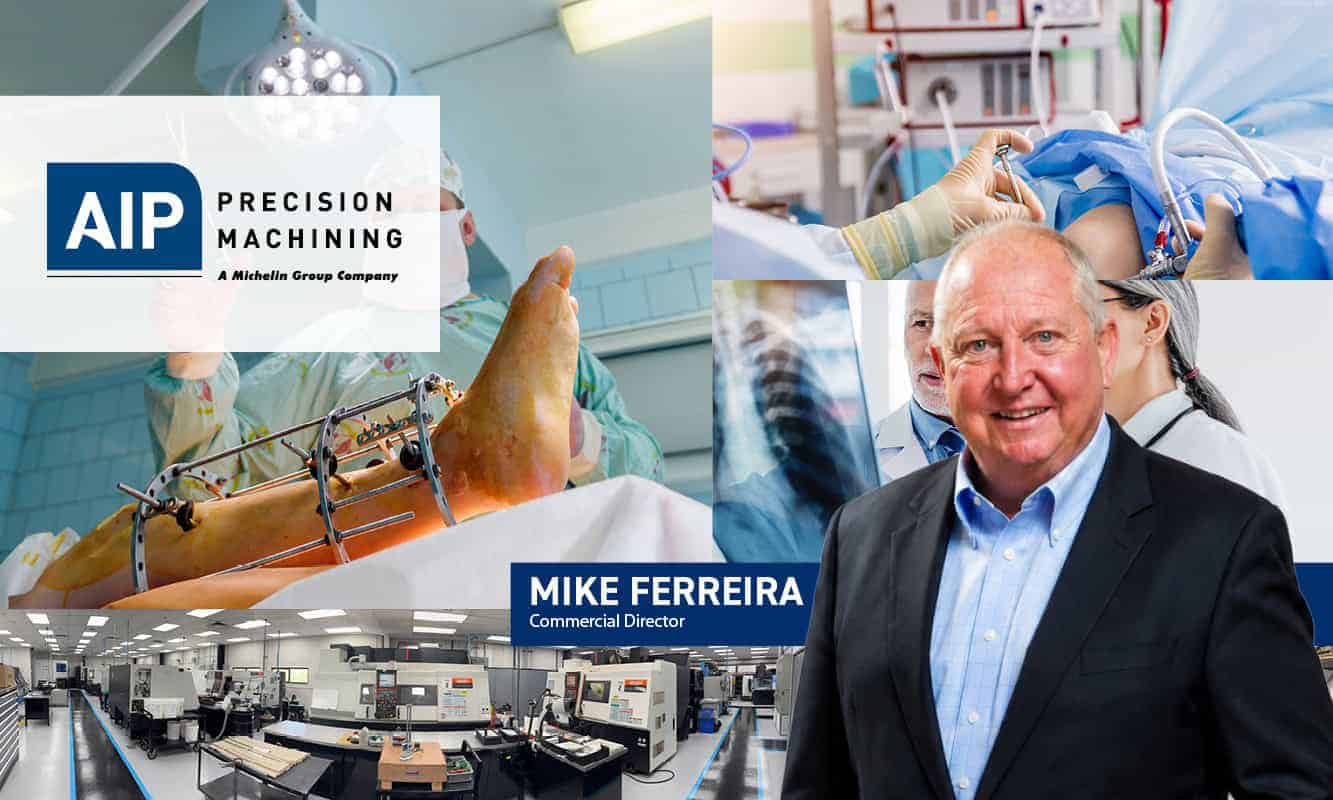
By Mike Ferreira
In orthopedic trauma, implant system value is often measured by the nail, plate, screw, or pin left in the patient. That implant represents the OEM’s primary economic return, regulated product, and long-term clinical solution. But the implant’s success depends on something that does not remain in the body: the instrumentation used to place it. This is why trauma guides matter.
Trauma guides help surgeons drill intersecting holes in implant nails for precise screw and pin placement. They also support accurate and repeatable positioning of nails and bone plates during procedures. As orthopedic procedures become more focused on patient outcomes, surgeons need guide options that can support different anatomies, surgical approaches, and implant systems. For OEMs, this means the implant cannot be viewed alone. The guide system must be engineered, machined, documented, and supported with the same level of discipline as the implant it helps place.
The Instrument May Not Stay in the Body, But It Protects the Value of the Implant
From a business perspective, the implant is the product. It carries the regulatory burden, the clinical value, and the revenue opportunity. However, the trauma guide plays a critical role in protecting that value. Even small inaccuracies in a drill guide can create meaningful risk. Hole position, angular accuracy, tolerance accumulation, dimensional stability, and repeatability all influence implant system performance. For trauma nails and bone plates, precise tolerances and hole placement are essential to proper surgical execution.
A guide that is difficult to use, dimensionally unstable, or poorly aligned can create uncertainty in the operating room. It may slow the procedure, complicate placement, or force the surgical team to make adjustments under pressure. That is why precision machining is not simply a manufacturing step. It is a strategic requirement.
For complex orthopedic guides, the machining partner must understand more than the print. The team must understand the material, the function of the guide, the inspection strategy, the sterilization environment, and the regulatory expectations that come with medical instrumentation.
Why Thermoplastic Composites Became Important in Medical Instruments
The adoption of thermoplastic composites in medical instruments originated in Europe, with Swiss manufacturers playing a significant role. Much of the fabrication base, especially for advanced composite laminates and medical-grade components, remains in Europe.
PEEK is now the leading thermoplastic in this field, particularly in 50% woven carbon fiber laminates and 30% short carbon fiber extruded or molded grades. Its performance profile makes it well-suited for reusable medical instruments. PEEK offers chemical resistance, hydrolysis resistance, abrasion resistance, high ductility, low outgassing, and strong performance in demanding medical and life sciences applications. These properties make it valuable for components that must endure repeated handling, cleaning, sterilization, and use.
For trauma guides, material selection involves more than strength. It must also address:
- Dimensional stability over repeated use cycles
- The ability to hold tight tolerances
- Resistance to steam sterilization and cleaning exposure
- Machinability of complex holes, slots, and profiles
- Reliable performance in surgeon-facing instrumentation
- Consistent repeatability from prototype through production
Carbon-filled PEEK adds another layer of value when stiffness, strength, and dimensional control are critical. But these materials also require machining experience. Fiber orientation, laminate behavior, tool selection, fixturing, and inspection strategy can all affect the final part. The material is important. The ability to machine it correctly is just as important.
PEEK’s Medical Value: Biocompatibility and Autoclave Performance
PEEK is biocompatible and has a proven history in medical applications. It is widely used in medical and life sciences settings where chemical inertness, strength, radiolucency, and reliable performance are important. For reusable trauma guides, sustained autoclave performance is critical. Repeated steam sterilization can compromise many materials, especially when tight tolerances and drilled features must remain consistent.
PEEK’s hydrolysis and steam resistance make it well-suited for instruments that require reliable function over multiple sterilization cycles. For orthopedic OEMs, this matters because guide performance cannot be judged only at first article inspection. It must hold up through handling, cleaning, sterilization, storage, and repeated surgical use. A guide that meets tolerance on day one but changes over time can create downstream risk. This is where material knowledge, machining discipline, and quality control must work together.
The Real Risk Is Not the Material Alone; It Is the Launch Process
In my experience, successful trauma guide programs require more than choosing PEEK or a carbon-filled PEEK composite. The most important work often happens before production starts. Design-for-manufacturing collaboration between OEM teams and machining engineers is essential for a smooth, successful launch. These discussions should address:
- Hole position and angular tolerance requirements
- Datum strategy and inspection approach
- Material grade selection
- Carbon fiber orientation or laminate considerations
- Autoclave and cleaning exposure
- Surgeon handling requirements
- Lot control, repeatability, and documentation
- Prototype feedback before production release
- Production scalability and lead-time expectations
At AIP Precision Machining, our consultative engineering approach is critical at this stage. We do more than machine to specification. We help OEM teams evaluate how material, geometry, tolerance strategy, and manufacturing processes come together before the guide reaches the operating room. This early collaboration can reduce redesigns, improve manufacturability, support quality planning, and help accelerate time to market. It also helps protect the OEM from discovering production issues late in development, when changes are more expensive and timelines are harder to recover.
Why a U.S.-Based Precision Machining Partner Matters
For highly complex surgical guides, where precision, documentation, repeatability, and speed to market all matter, the location of the machining partner can have a significant impact on program success. Working with a local, U.S.-based company offers practical advantages that are difficult to overlook.
When engineering teams, quality teams, and manufacturing teams operate in aligned time zones, communication becomes faster and more efficient. A design question can be resolved the same day. A tolerance concern can be discussed in real time. A prototype issue can be reviewed with the people who understand the part, the material, and the process.
This matters during development, where speed and clarity are essential. Trauma guide programs often require fast iteration. A small change to a hole location, handle geometry, inspection datum, or material thickness may need immediate review. When teams can communicate directly and quickly, the program can move forward with fewer delays.
A U.S.-based machining partner also gives OEMs stronger oversight. It is easier to schedule engineering reviews, visit the facility, review quality systems, inspect production processes, and build a close working relationship with the team responsible for the part. For regulated medical applications, that visibility supports confidence.
The benefits include:
- Faster communication between engineering and manufacturing teams
- Easier collaboration during DFM reviews
- More efficient prototyping and design iteration
- Better alignment between quality, documentation, and production needs
- Reduced shipping complexity
- Fewer logistics disruptions
- Shorter and more predictable lead times
- Greater visibility into manufacturing and inspection processes
- Stronger confidence in repeatability and lot control
These advantages become even more important when the guide has complex geometry, tight positional tolerances, or features that require advanced inspection and documentation.
Certifications, Quality Systems, and Experience Matter
A local partner is only valuable if it also has the right technical depth, certifications, and quality systems. Orthopedic instrumentation is not general-purpose machining. Surgical guides for regulated medical applications require a manufacturing partner that understands high-performance polymers, tight tolerances, inspection discipline, traceability, and documentation.
AIP Precision Machining supports demanding medical and aerospace applications and maintains ISO 13485:2016 certification for machining custom plastic components across commercial, medical, aerospace, and energy sectors. This quality foundation is important for OEMs that need confidence in process control, documentation, repeatability, and compliance expectations.
AIP also provides design-for-manufacturing support to help clients improve manufacturability, reduce costs, enhance performance, and accelerate time to market. For trauma guide programs, this support can be especially valuable before production release.
The right machining partner can help identify:
- Features that may be difficult to hold consistently
- Tolerances that may increase cost without improving performance
- Material options that better support sterilization and use conditions
- Fixture or inspection strategies that improve repeatability
- Prototype risks that should be resolved before production
- Documentation needs for regulated medical programs
This level of collaboration helps OEMs move from design intent to production reality with greater confidence.
Precision Is the Difference Between an Instrument and a System
Trauma guides may not be the highest-value component in an implant system, but they are essential to preserving that value. They help surgeons place implants accurately, support consistent procedure execution, and reduce uncertainty in the operating room.
As demand for improved outcomes grows and pressure on cost, timing, and performance increases, OEMs must ensure guide systems are engineered with the same rigor as the implants themselves. The takeaway is straightforward: the implant may be the product, but the guide is essential to its success. For orthopedic trauma, that distinction matters.
If your team is developing a trauma guide, orthopedic instrument, or reusable medical component where material performance, hole-position accuracy, documentation, and speed to market are critical, engage AIP Precision Machining early in the design process. Our U.S.-based engineering and machining teams support material selection, DFM review, prototyping, precision production, and quality-focused manufacturing for complex PEEK and carbon-filled PEEK components used in regulated medical applications.
Contact AIP Precision Machining to discuss your next orthopedic instrumentation program.